



Why Water Credits Could Outgrow Carbon Credits in Tech
Why Water Credits Could Outgrow Carbon Credits in Tech


Carbon credits have become a familiar way for companies to address greenhouse-gas emissions. As the digital hard infrastructure for technology expands, however, water-use is emerging as another quantifiable impact metric, particularly because data centers can require substantial amounts of water for cooling,.
Major technology companies are already setting water-related targets. Microsoft and Amazon Web Services have committed to becoming water positive by 2030, and both are investing in water efficiency, reuse, and projects designed to replenish water in stressed watersheds. Meta has made a similar water-positive pledge for 2030, aiming to restore twice the water it consumes in high-stress regions and all of the water it consumes in medium-stress regions. Google has gone a step further, setting a goal to replenish 120% of the freshwater its offices and data centers consume, and it has developed tools for assessing watershed conditions around its facilities. Apple, meanwhile, has committed to replenishing 100% of the freshwater its corporate operations use in high-stress locations by 2030, and it has already reached that target in India.
This has created growing interest in mechanisms that can quantify and finance measurable water benefits. Potential water-credit systems could track outcomes such as water saved, replenished or restored within a specific watershed. Water credits would not simply be a direct replacement for carbon credits. Water is highly local: the value of a unit of water depends on where, when and how it is used. Organizations such as the World Resources Institute are developing accounting frameworks to help companies measure water benefits more consistently.
As data-center development accelerates and technology companies make increasingly specific water commitments, independently measured water benefits could become an important part of corporate sustainability strategies. The emerging market could eventually give companies another way to invest directly in water resilience alongside existing carbon markets.
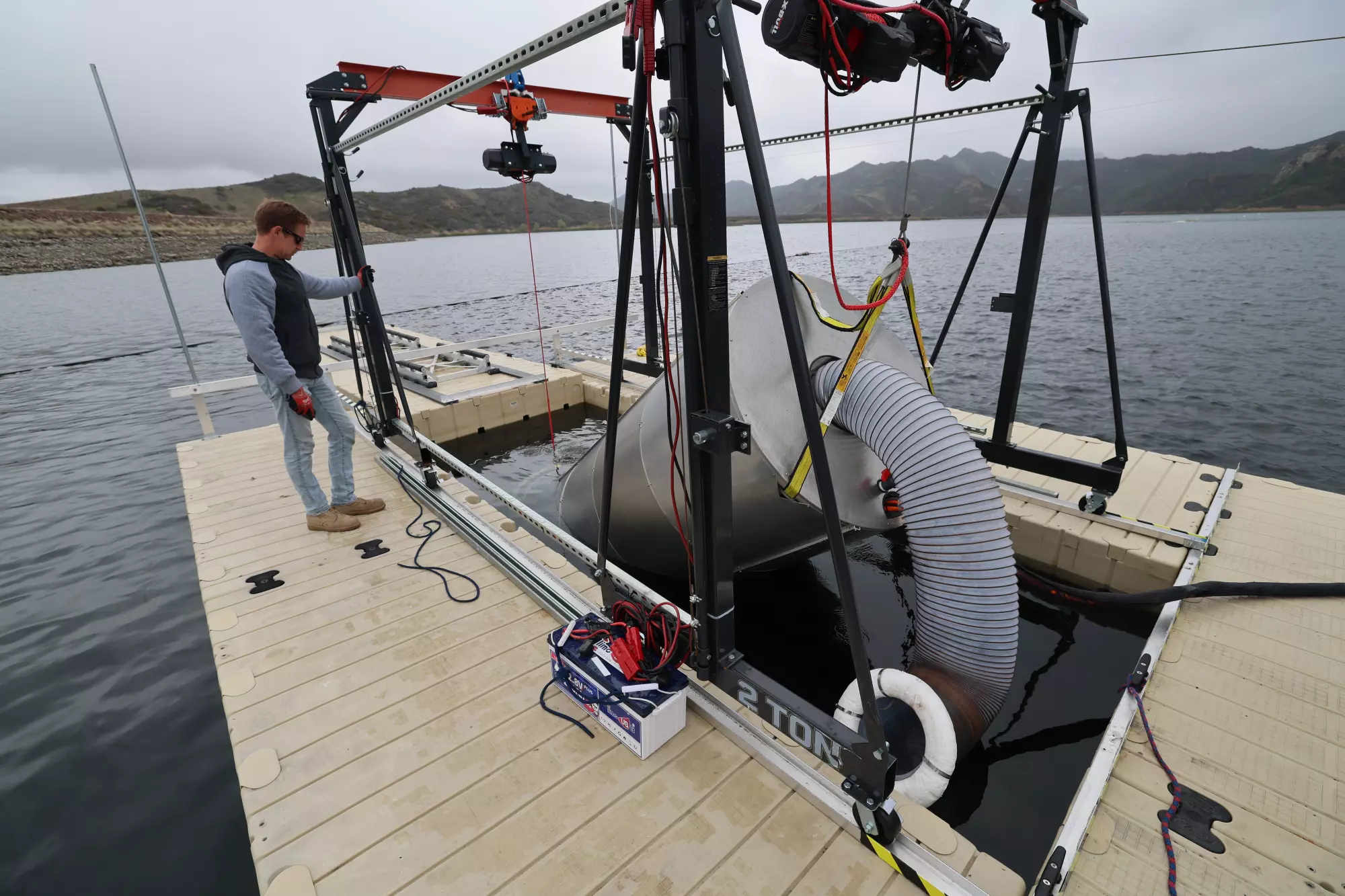
For water-intensive industries, the next step may be moving beyond simply reducing water consumption toward investing in new, reliable sources of supply. Projects that increase water availability, improve efficiency or reduce pressure on stressed freshwater sources could become increasingly important as technology infrastructure expands. If credible standards develop for measuring these benefits, investments in water infrastructure could eventually provide companies with a more direct way to demonstrate measurable contributions to local water resilience.
What is a water credit? Much like a carbon credit, it's a market-based tool that put a measurable value on freshwater. As it is currently outlined, one water credit represents 1,000 gallons of natural freshwater flow that has been improved, restored, or added as net new supply. Credits are generated by verified projects, such as reclaiming wastewater, harvesting rainwater, running closed-loop recycling systems, or restoring rivers, wetlands, and groundwater, and can then be purchased by businesses, utilities, and other organizations looking to offset their water footprint.
However, because the market is still young, credit sizes can vary by provider. The Bonneville Environmental Foundation, for example, issues Water Restoration Certificates on the same 1,000-gallon basis. That variation makes independent verification and transparent tracking essential to ensuring each credit reflects real water on the ground. Another provider leading the way is Hypercube, which issues a water credit token for every cubic meter of water reused or conserved. The company partners with water treatment and reuse facilities that measure recycled water with flow meters and log the data automatically on a blockchain platform, and it has signed an agreement with Brazil's Federal District to help build a local water credit market.
Ideally, the emerging markets will reach a consensus on the appropriate unit, whether it be 1,000 gallons per credit or 1,000 liters (1m3). Once a standardization of the underlying commodity has occurred, the markets could enable greater investment in an undervalued resource, resulting in the advancement of new water technologies and drought mitigation worldwide.
References
- World Economic Forum. Water Futures: Mobilizing Multi-Stakeholder Action for Resilience.
https://www.weforum.org/publications/water-futures-mobilizing-multi-stakeholder-action-for-resilience/
- World Resources Institute. New Water Quality Benefit Accounting and Volumetric Water Benefit Accounting Guidebooks.
https://www.wri.org/update/new-wqba-vwba-guidebooks-launched
- Microsoft. Microsoft Will Replenish More Water Than It Consumes by 2030.
https://blogs.microsoft.com/blog/2020/09/21/microsoft-will-replenish-more-water-than-it-consumes-by-2030/
- Amazon Web Services. Advancing Water Stewardship at AWS.
https://aws.amazon.com/blogs/infrastructure-sustainability/advancing-water-stewardship-at-aws-new-water-withdrawals-data-now-available-in-the-aws-sustainability-console/
- Google Cloud. Assessing Watershed Health in Data Center Host Communities.
https://cloud.google.com/blog/topics/sustainability/assessing-watershed-health-in-data-center-host-communities





Heading