



The Rise of Water-Native Infrastructure
The Rise of Water-Native Infrastructure


For more than a century, infrastructure has been designed around land. Cities, power plants, transportation networks, and industrial facilities have all followed a familiar pattern: build on land, then find ways to move water where it's needed. But as freshwater scarcity, climate change, urbanization, and growing energy demands reshape the global landscape, a new paradigm is emerging: water-native infrastructure.
Rather than treating oceans, lakes, and other water bodies as obstacles or simply sources of raw materials, water-native infrastructure embraces them as the natural environment in which critical systems can operate. This shift has the potential to redefine how we think about water security, energy efficiency, food production, computing, and coastal resilience.
Why the Shift Is Happening
More than half of the world's population experiences severe water scarcity for at least part of the year. At the same time, coastal populations continue to grow, placing greater pressure on aging freshwater systems. Desalination has become an increasingly important tool for water security, particularly in arid coastal regions, but traditional land-based facilities often require significant energy, large land footprints, and careful management of environmental impacts.
Meanwhile, industries such as artificial intelligence, cloud computing, and advanced manufacturing are driving unprecedented demand for energy and water. Data centers, for example, require substantial cooling resources, prompting engineers to rethink where future infrastructure should be located and how natural water resources can be integrated more efficiently.
These converging trends are accelerating interest in infrastructure designed specifically to operate in or alongside the marine environment.
Water as an Operating Platform
Water-native infrastructure applies to subsea filtration because it leverages the unique characteristics of the ocean itself.
Deep ocean pressure, naturally stable temperatures, abundant space, and proximity to coastal populations offer opportunities that conventional land-based systems cannot easily replicate. Engineers are also exploring floating renewable energy platforms, offshore aquaculture, submerged robotics, marine carbon removal, and floating data centers.
For example, several technology companies are investigating floating or submerged data centers that use seawater for cooling, reducing energy requirements while easing pressure on increasingly scarce land resources. Researchers are also studying ways to integrate desalination with other infrastructure systems, including utilizing waste heat from data centers to improve water production efficiency.
Rather than building separate systems that compete for land, water, and energy, future infrastructure may increasingly function as interconnected marine ecosystems.
Building for Resilience
Climate change is forcing communities to reconsider where and how critical infrastructure is built.
Sea level rise, prolonged droughts, extreme heat, and increasingly volatile weather events are exposing vulnerabilities in conventional infrastructure planning. Water-native systems offer an opportunity to distribute assets, reduce dependence on limited freshwater supplies, and utilize renewable marine resources more effectively.
This doesn't replace traditional infrastructure, it optimizes it. Coastal cities may increasingly rely on a combination of recycled water, groundwater management, stormwater capture, and advanced desalination technologies to diversify their water portfolios and improve long-term resilience.
OceanWell's Role
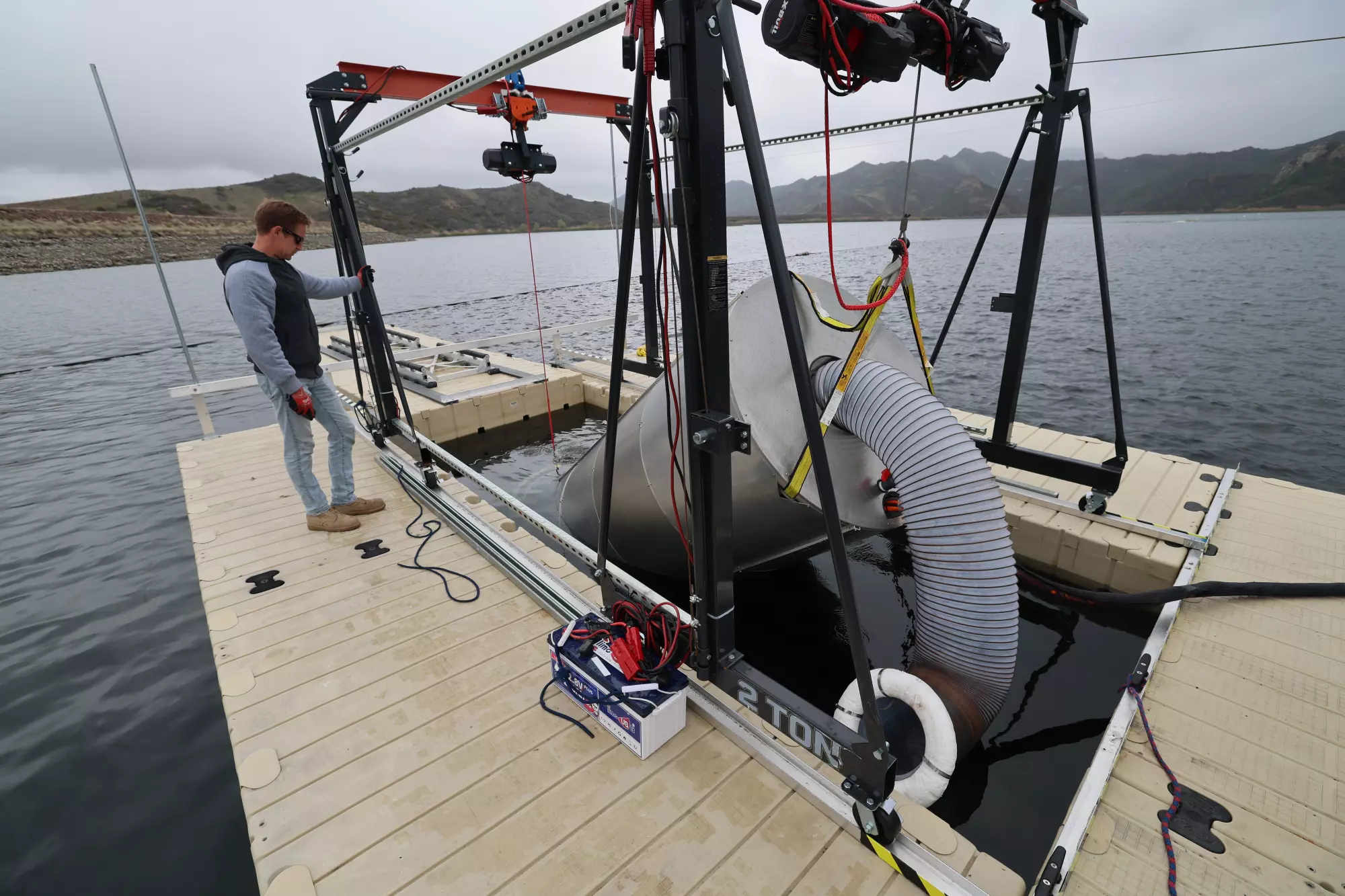
OceanWell is helping shape this new generation of water-native infrastructure through its innovative underwater reverse osmosis technology. Instead of placing large desalination facilities onshore, OceanWell's deep-ocean systems operate hundreds of meters below the surface, where natural hydrostatic pressure performs much of the work traditionally supplied by energy-intensive pumps. By leveraging the ocean's own physics, the technology has the potential to reduce energy consumption while minimizing marine impacts associated with conventional seawater intake and concentrated brine discharge. As OceanWell advances testing and pilot deployments, the company is demonstrating how working with the ocean; not against it can create a more sustainable path toward freshwater security.
Looking Ahead
The future of infrastructure will likely be defined not only by smarter technology but also by smarter placement. As freshwater becomes more valuable and coastal populations continue to expand, designing systems that naturally integrate with the marine environment will become increasingly important.
Water-native infrastructure represents more than an engineering trend. It reflects a broader shift toward building systems that work in harmony with natural processes, improving resilience while reducing environmental impact.
The ocean has always been one of Earth's greatest resources. Increasingly, it may also become one of its most important foundations for the infrastructure of the future.
References
- International Energy Agency (IEA). Wired for Water: How Electrification Is Transforming Desalination.https://www.iea.org/commentaries/wired-for-water-how-electrification-is-transforming-desalination
- American Society of Civil Engineers (ASCE). Policy Statement 407 – Desalination.https://www.asce.org/advocacy/policy-statements/ps407---desalination
- Mauter, M.S. & Fiske, P.S. Desalination for a Circular Water Economy. Energy & Environmental Science (2020). https://doi.org/10.1039/D0EE01653E
- Shahabi, M.P., McHugh, A., Anda, M., & Ho, G. A Framework for Planning Sustainable Seawater Desalination Water Supply. Science of the Total Environment (2017). https://pubmed.ncbi.nlm.nih.gov/27720252/
- Associated Press. In a Warming World, Freshwater Production Is Moving Deep Beneath the Sea.https://apnews.com/article/faba2579f83df4c0688a3ea5e20ab3a6
- Applied Energy. Enabling Grid-Interactive Data Center–Desalination Coordination Through Thermo-Electric Coupling-Based Waste Heat Utilization. https://www.sciencedirect.com/science/article/pii/S0306261926000802




Heading