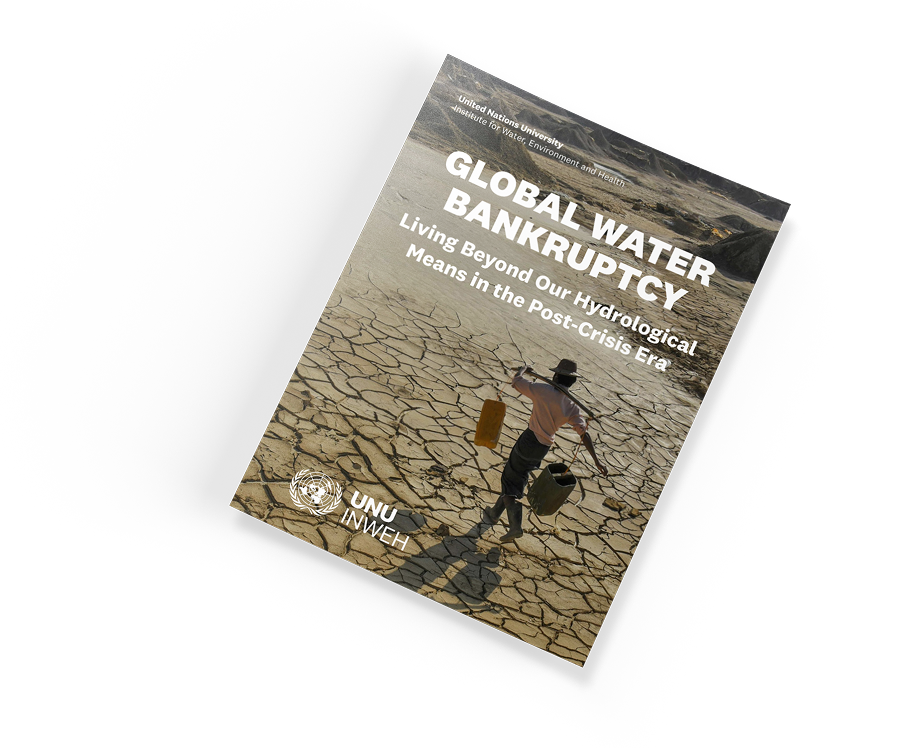



The world has entered a post-crisis era. We are no longer facing a temporary shortage, but a structural insolvency of our planet’s hydrological capita
Living Beyond Our Hydrological Means
Of the world's major aquifers show long-term declining trends. Excessive extraction has caused land subsidence over 6 million km², permanently reducing storage capacity
Of the world's major aquifers show long-term declining trends. Excessive extraction has caused land subsidence over 6 million km², permanently reducing storage capacity
Of the world's major aquifers show long-term declining trends. Excessive extraction has caused land subsidence over 6 million km², permanently reducing storage capacity
The world has lost 410 million hectares of natural wetlands—an area the size of the European Union—costing $5.1 trillion in lost ecosystem services.


Long-term over-extraction of aquifers and surface water gradually erodes reserves. Initial warning signs, like declining water tables, are ignored under the false assumption that these are temporary fluctuations rather than a structural deficit .
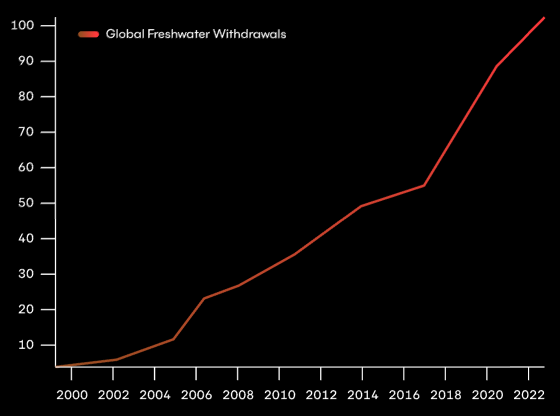


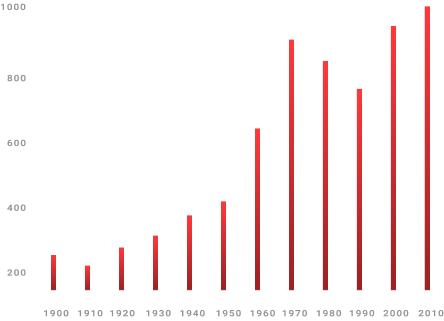
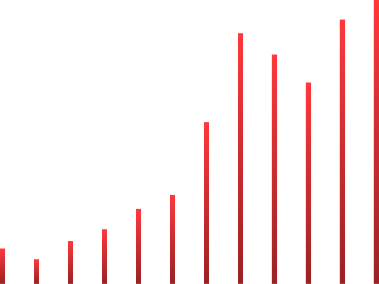
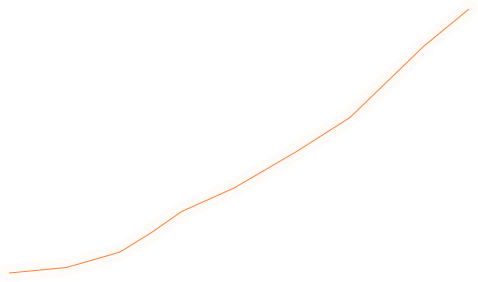
Since 1900, global water withdrawals have surged, driven largely by agriculture. This exponential growth assumes an infinite supply that no longer exists | UNU-INWEH Report 2026
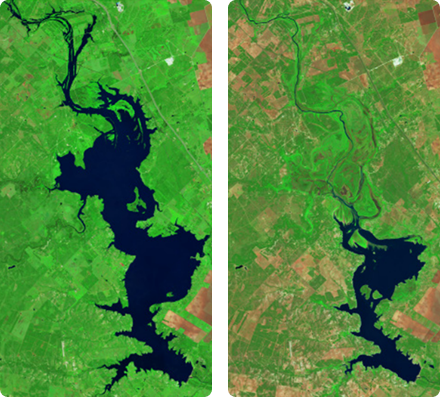
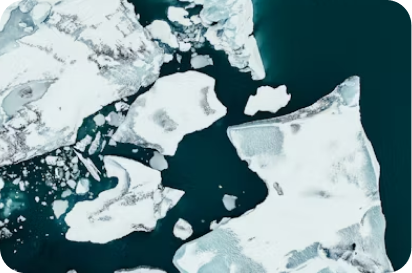
Lake Mead, 2000 vs. 2022. Once a symbol of engineering triumph, the reservoir dropped to 27% capacity, signaling the failure of infrastructure to outpace climate reality | UNU-INWEH Report 2026

Large-scale dams and diversions enable unsustainable agricultural and urban expansion. In dry years, the system collapses, revealing that the development model relies on hydrological flows that simply no longer exist in the modern climate reality

Wetlands and freshwater ecosystems are being destroyed three times faster than forests. We are liquidating the planet's natural kidneys, causing a catastrophic decline in the species that maintain water quality and resilience against floods.
Freshwater ecosystems are collapsing faster than any other biome. We have lost 85% of freshwater vertebrate populations since 1970—the canary in the coal mine for planetary health | UNU-INWEH Report 2026.
Despite evidence of systemic failure, institutions act as if the "old normal" will return. Critical decisions are postponed, and subsidies continue to incentivize overuse, locking societies into a pathway of irreversible hydrological bankruptcy
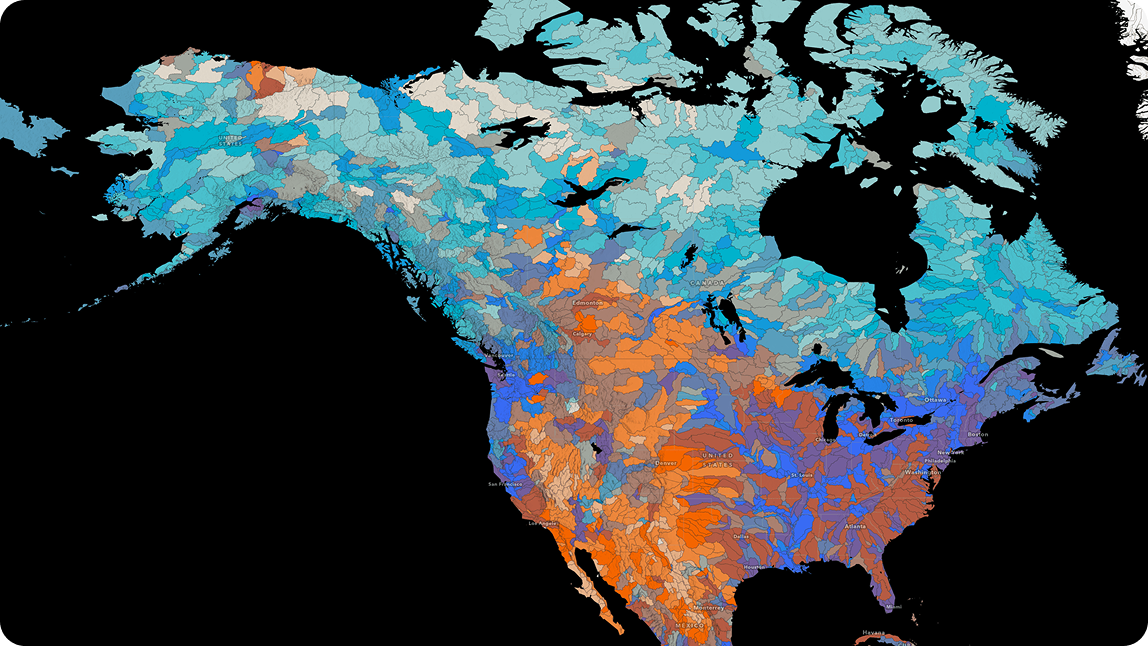
High Baseline Water Stress. Regions marked in dark blue face 'extremely high' water risk, where humanity’s thirst has permanently outstripped the renewal rate of local basins.
A Systemic Risk to Global Stability.


As soil moisture evaporates and landscapes dry out, we lose our natural fire resistance. This drives a surge in wildfire exposure, which destroys watersheds and contaminates remaining supplies with ash, further crippling water security.
.png)


Scarcity is a threat multiplier. As basins dry up, competition intensifies, triggering a sharp rise in local and transboundary disputes. Water is no longer just an environmental issue; it is a central driver of geopolitical instability.
.png)


Agriculture consumes 70% of global freshwater. With aquifers collapsing, we risk a massive contraction in arable land, threatening food security for 3 billion people who depend on water-stressed production systems.
To exit global water bankruptcy, we must decouple fresh water production from ecological destruction.


We bypass the energy-intensive pumps of land-based plants. Using natural hydrostatic pressure at 400m+ depth, our pods reduce energy consumption by 40%, delivering the lowest carbon footprint in the industry.

No massive coastal plants. No aesthetic pollution. Our modular subsea pods are invisible from the shore and can be deployed rapidly to any coastal city, preserving valuable real estate and landscapes.

Current desalination kills marine life and creates dead zones with toxic brine. OceanWell operates in the aphotic zone (dark ocean) with a passive intake system, ensuring zero harm to flora or fauna. No brine accumulation, just natural circulation.

This section is based on the findings of the Global Water Bankruptcy Report 2026 by the United Nations University (UNU-INWEH). Understand the full scope of the challenge to appreciate the necessity of our solution.