



Why the Desalination Reauthorization Act Matters for the Southwest's Water Future
Why the Desalination Reauthorization Act Matters for the Southwest's Water Future


Every new water technology must navigate the same critical progression: from innovation and research, through demonstration and successful pilots, to full-scale deployment. The defining challenge is bringing together the elements required to make that transition possible: strong financing, permitting, regulatory certainty, and strategic partnerships that together can move proven innovation into large-scale infrastructure.
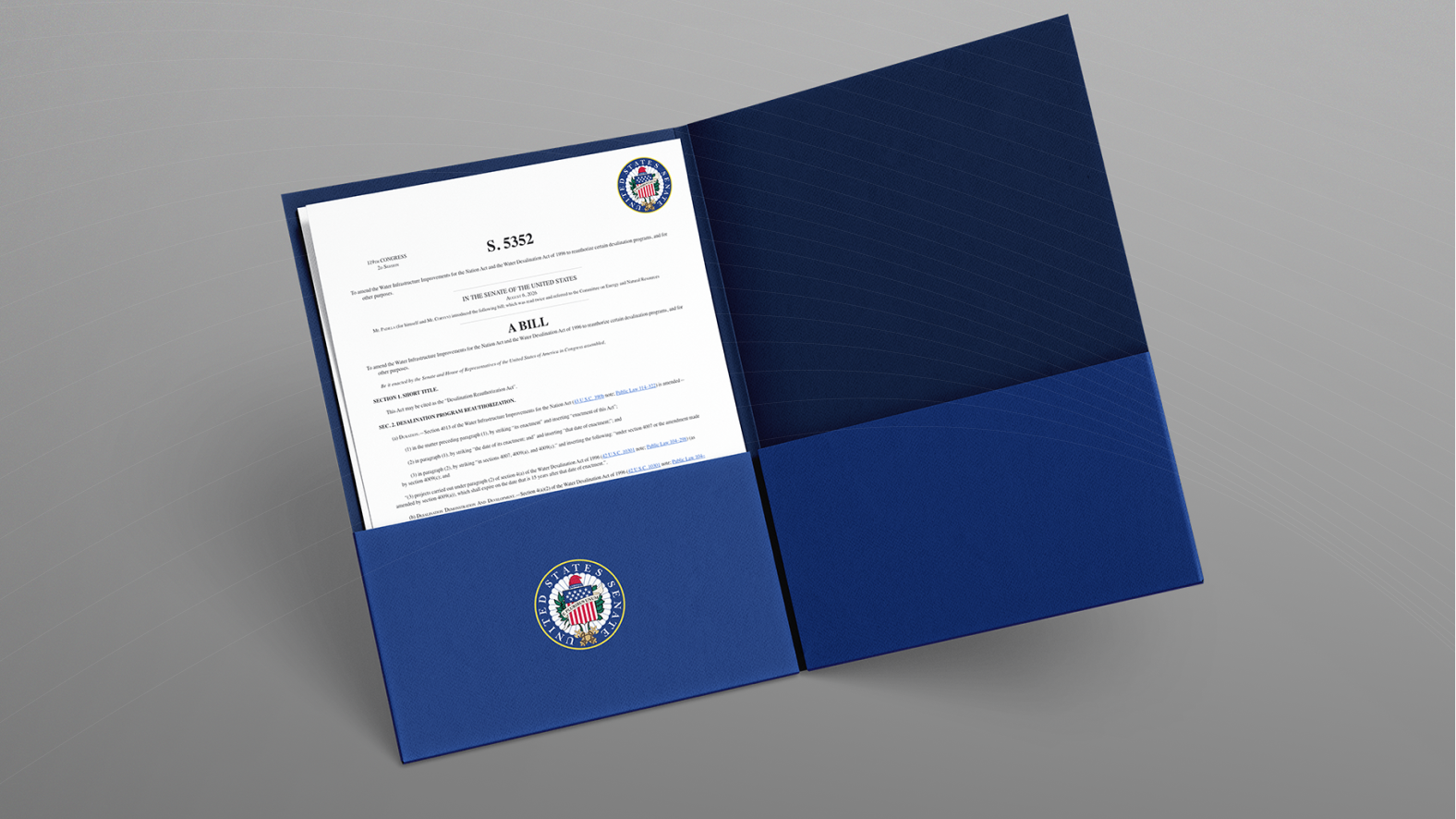
U.S. Senator Alex Padilla (D-California) and Senator John Cornyn (R-Texas) have introduced bipartisan legislation to support desalination projects and research. The Desalination Reauthorization Act, has four key goals:
- Extend the U.S. Department of the Interior – Bureau of Reclamation's (Bureau of Reclamation) existing authority to provide grants for desalination projects and research – an authority otherwise set to expire this year;
- Amend the programmatic approval to extend to public-private partnerships to build desalination projects;
- Directs the Bureau of Reclamation that it cannot administratively impose a maximum funding amount that each desalination project can receive; and
- Amends the desalination and water purification research program to advance pilot projects.
A lot of water innovation stalls in the “Valley of Death” for new technologies – the space between small-scale pilots that test a laboratory concept and commercially viable projects. This legislation seeks to provide a support for new technologies to not get stuck in the Valley. Further, without this legislation, Congress would be required to pass additional legislation to authorize desalination projects – an additional step that would further delay projects and increase costs.
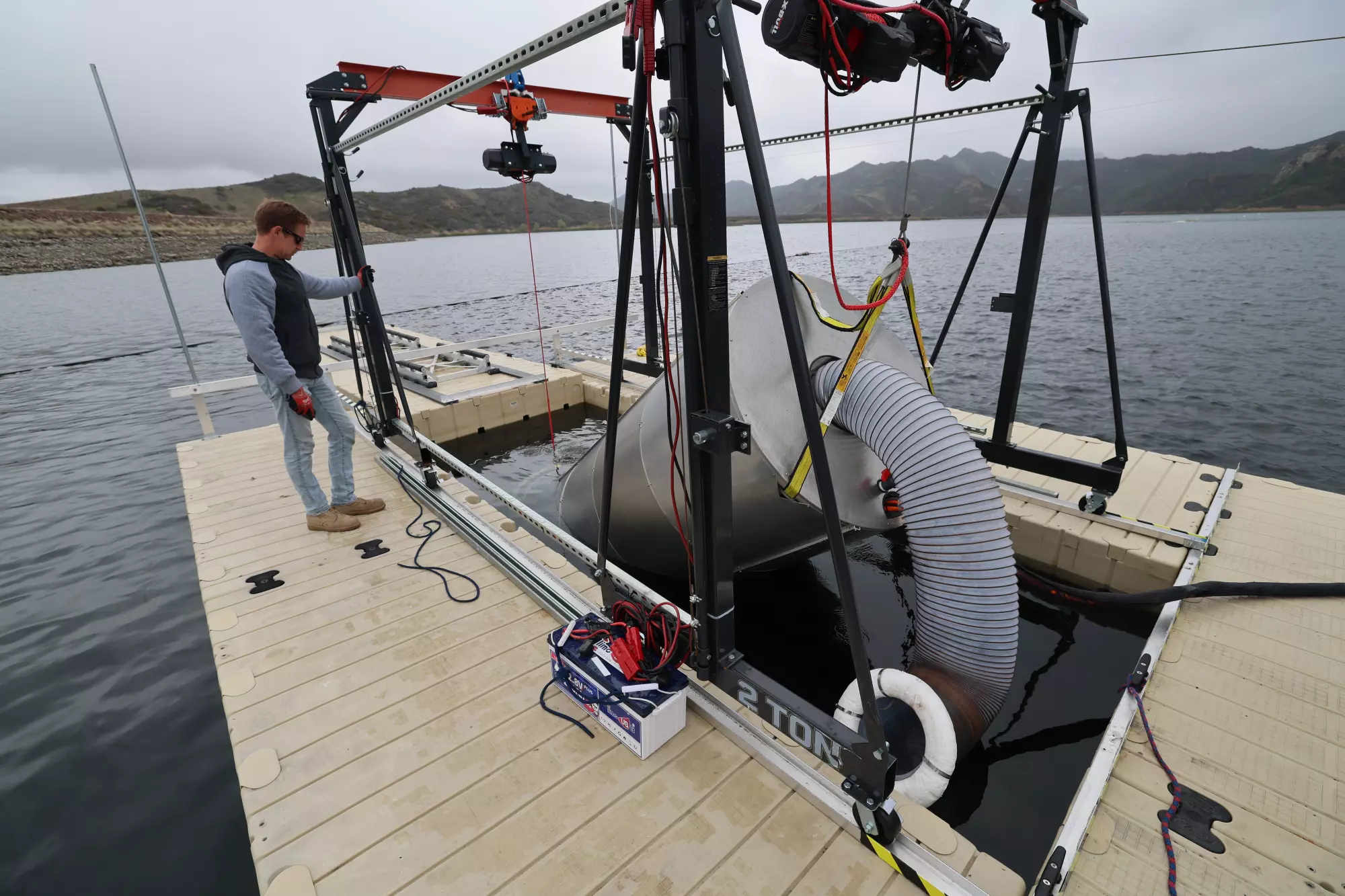
The introduction of this legislation is particularly timely and important as OceanWell continues to work with Las Virgenes Municipal Water District (LVMWD), and other California water agencies to advance Water Farm 1. The public-private partnership between OceanWell, LVMWD, and the other California water agencies, is working together to deploy the first subsea reverse osmosis project at large-scale – designed to delivered up to 60 million-gallons-per-day of fresh water by 2030. Together, we are forging forward to create a new, reliable water supply.
Robert Bergstrom, CEO of OceanWell said “water scarcity is one of the defining challenges of this century, and meeting it requires not only bold innovation, but a clear path to bring that innovation to scale. The Desalination Reauthorization Act strengthens that pathway by enabling new water technologies, like OceanWell, to work with the Bureau of Reclamation to accelerate deployment through federal investment and public-private partnerships.”
The persistence of drought in California, Texas, and across the Western United States sends one very clear message – a new water supply, that is not reliant on rainfall or snowpack is a requirement. The Desalination Reauthorization Act recognizes that desalination is critical to the water supply portfolio of the Western United States.
Status of Legislation
Senator Padilla and Senator Cornyn introduced the Desalination Reauthorization Act on August 6, 2026. The bill subsequently was considered in a legislative hearing before the U.S. Senate Energy and Natural Resource Committee. The legislation will now need to be passed affirmatively out of the Senate Committee and the full Senate Chamber as well as considered favorably in the U.S. House of Representatives.





Heading