




In a warming world, freshwater production is moving deep beneath the sea
In a warming world, freshwater production is moving deep beneath the sea
.webp)

CARLSBAD, Calif. (AP) — Some four miles off the Southern California coast, a company is betting it can solve one of desalination’s biggest problems by moving the technology deep below the ocean’s surface.
OceanWell’s planned Water Farm 1 would use natural ocean pressure to power reverse osmosis — a process that forces seawater through membranes to filter out salt and impurities — and produce up to 60 million gallons (nearly 225 million liters) of freshwater daily. Desalination is energy intensive, with plants worldwide producing between 500 and 850 million tons of carbon emissions annually — approaching the roughly 880 million tons emitted by the entire global aviation industry.
OceanWell claims its deep sea approach — 1,300 feet (400 meters) below the water’s surface — would cut energy use by about 40% compared to conventional plants while also tackling the other major environmental problems plaguing traditional desalination: the highly concentrated brine discharged back into the ocean, where it can harm seafloor habitats, including coral reefs, and the intake systems that trap and kill fish larvae, plankton and other organisms at the base of the marine food web.
“The freshwater future of the world is going to come from the ocean,” said OceanWell CEO Robert Bergstrom. “And we’re not going to ask the ocean to pay for it.”
It’s an ambitious promise at a time when the world desperately needs alternatives. As climate change intensifies droughts, disrupts rainfall patterns and fuels wildfires, more regions are turning to the sea for drinking water. For many countries, particularly in the arid Middle East, parts of Africa and Pacific island nations, desalination isn’t optional — there simply isn’t enough freshwater to meet demand. More than 20,000 plants now operate worldwide, and the industry has been expanding at about 7% annually since 2010.
“With aridity and climate change issues increasing, desalination will become more and more prevalent as a key technology globally,” said Peiying Hong, a professor of environmental science and engineering at King Abdullah University of Science and Technology in Saudi Arabia.
But scientists warn that as desalination scales, the cumulative damage to coastal ecosystems — many already under pressure from warming waters and pollution — could intensify.
A search for solutions
Some companies are powering plants with renewable energy, while others are developing more efficient membrane technology to reduce energy consumption. Still others are moving the technology underwater entirely. Norway-based Flocean and Netherlands-based Waterise have tested subsea desalination systems and are working toward commercial deployment. Beyond southern California, OceanWell has signed an agreement to test its system in Nice, France — another region facing intensifying droughts and wildfires — beginning this year.
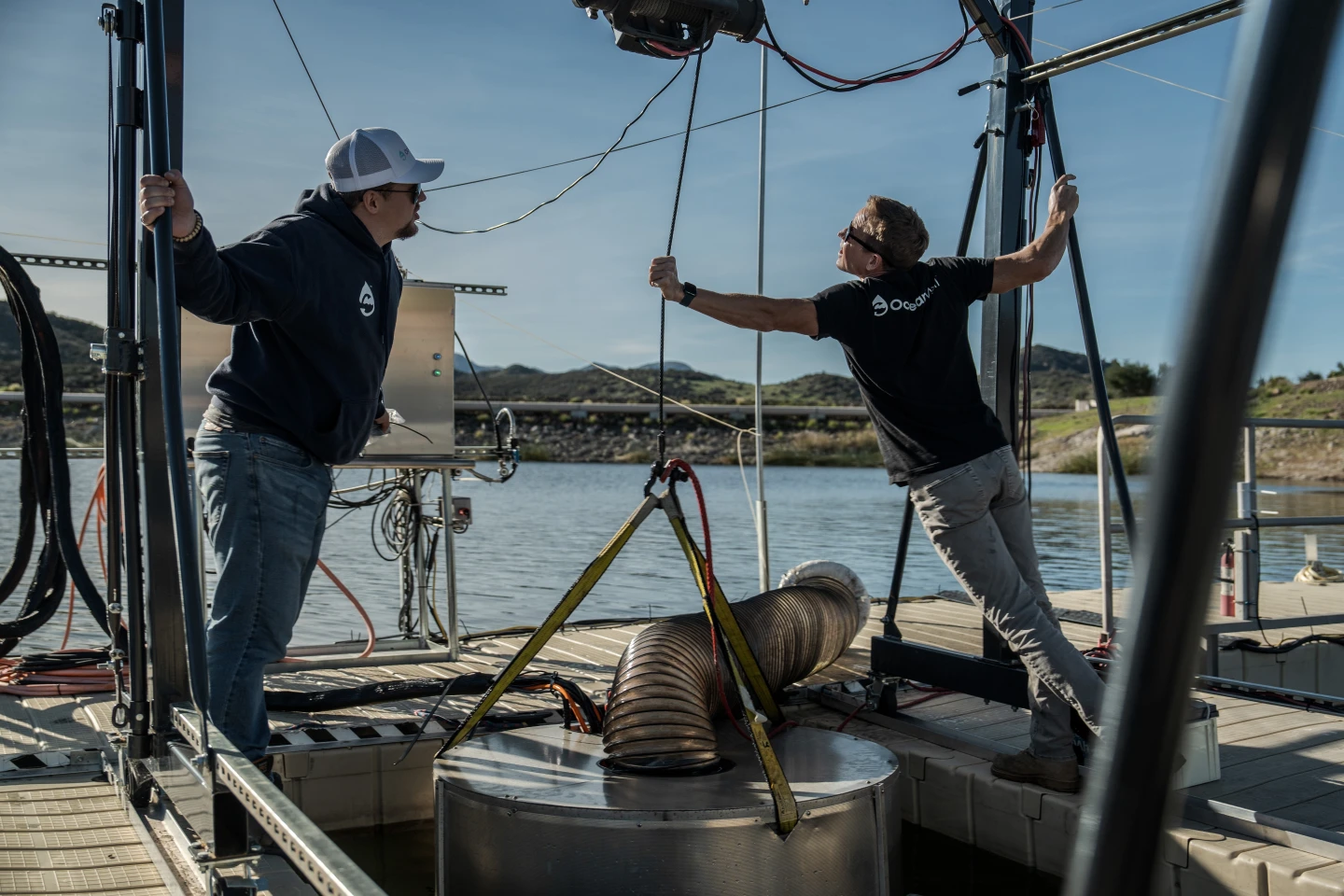
For now, its technology remains in development. A single prototype operates in the Las Virgenes Reservoir where the local water district has partnered with the company in hopes of diversifying its water supply. If successful, the reverse osmosis pods would eventually float above the sea floor in the Santa Monica Bay, anchored with minimal concrete footprint, while an underwater pipeline would transport freshwater to shore. The system would use screens designed to keep out even microscopic plankton and would produce less concentrated brine discharge.

Gregory Pierce, director of UCLA’s Water Resources Group, said deep sea desalination appears promising from an environmental and technical standpoint, but the real test will be cost.
“It’s almost always much higher than you project” with new technologies, he said. “So that, I think, will be the make or break for the technology.”
Las Virgenes Reservoir serves about 70,000 residents in western Los Angeles County. Nearly all the water originates in the northern Sierra Nevada and is pumped some 400 miles (640 kilometers) over the Tehachapi Mountains — a journey that requires massive amounts of energy. During years of low rainfall and snowpack in the Sierra, the reservoir and communities it serves suffer.
California’s desalination dilemma
About 100 miles (160 kilometers) down the coast, the Carlsbad Desalination Plant has become a focal point in the state’s debate over desalination’s environmental tradeoffs.
The plant came online in 2015 as the largest seawater desalination facility in North America. Capable of producing up to 54 million gallons (204 million liters) of drinking water daily, it supplies about 10% of San Diego County’s water — enough for roughly 400,000 households.
In Southern California, intensifying droughts and wildfires have exposed the region’s precarious water supply. Agricultural expansion and population growth have depleted local groundwater reserves, leaving cities dependent on imported water. San Diego imports roughly 90% of its supply from the Colorado River and Northern California — sources that are becoming increasingly strained by climate change. Desalination was pitched as a solution: a local, drought-proof source of drinking water drawn from the Pacific Ocean.
But environmental groups have argued the plant’s seawater intake and brine discharge pose risks to marine life, while its high energy demands drive up water bills and worsen climate change. Before the plant came online, environmental organizations filed more than a dozen legal challenges and regulatory disputes. Most were dismissed but some resulted in changes to the project’s design and permits.
“It sucks in a tremendous amount of water, and with that, sea life,” said Patrick McDonough, a senior attorney with San Diego Coastkeeper, which has participated in multiple legal challenges to the project. “We’re not just talking fish, turtles, birds, but larvae and spores — entire ecosystems.”
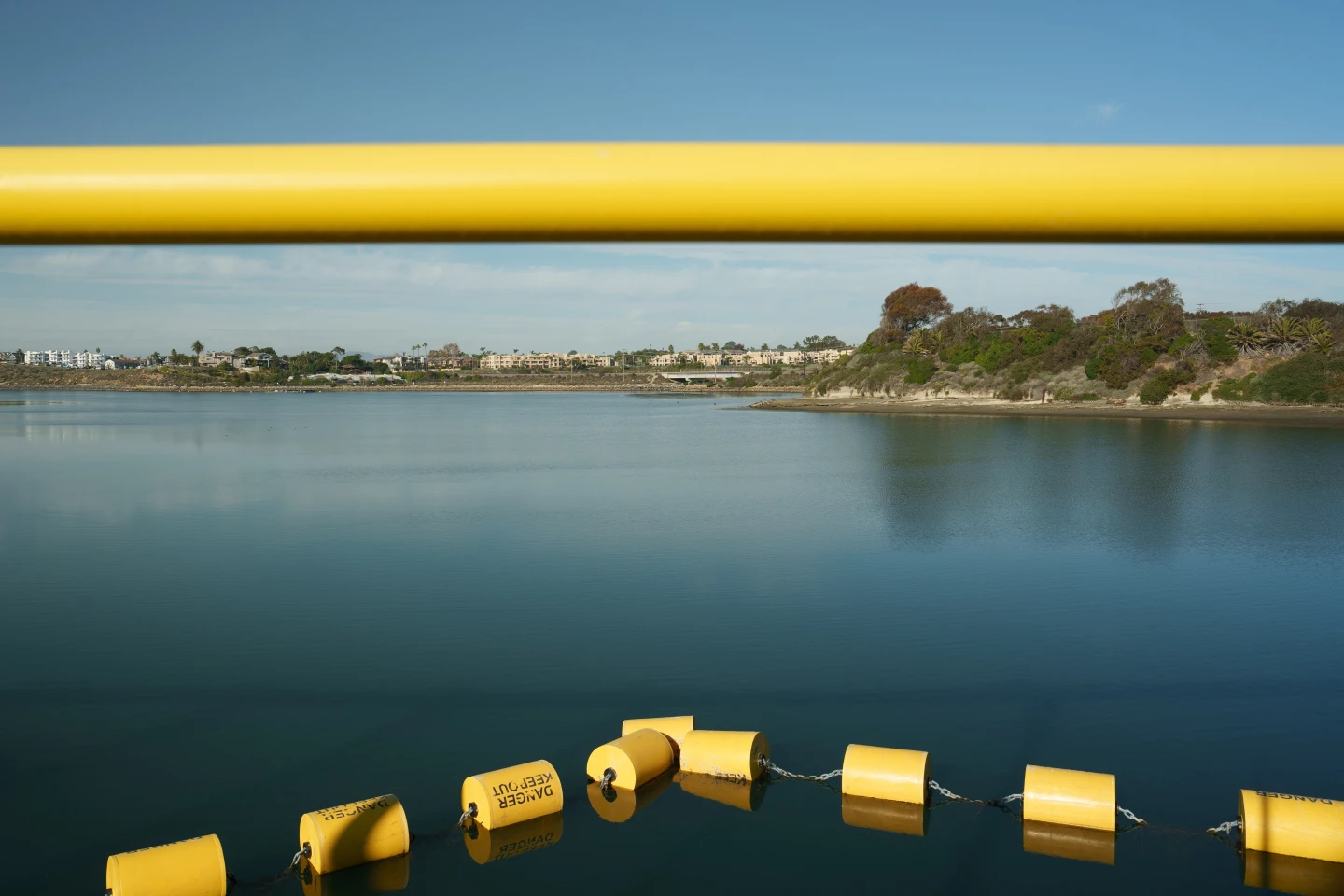
A 2009 Regional Water Quality Control Board order estimated the plant would entrap some 10 pounds (4.5 kilograms) of fish daily and required offsetting those impacts by restoring wetlands elsewhere. Seventeen years later, that restoration remains incomplete. And a 2019 study found the plant’s brine discharge raises offshore salinity above permitted levels, though it detected no significant biological changes — likely because the site had already been heavily altered by decades of industrial activity from a neighboring power plant.
Those impacts are especially acute in California, where roughly 95% of coastal wetlands have been lost largely to development, leaving the remaining lagoons as vital habitats for fish and migratory birds.
“When we start messing with these very critical and unfortunately sparse coastal lagoons and wetlands, it can have tremendous impacts in the ocean,” McDonough said.
Michelle Peters, chief executive officer of Channelside Water Resources, which owns the plant, said the facility uses large organism exclusion devices and one-millimeter screens to minimize marine life uptake, though she acknowledged some smaller species can still pass through.
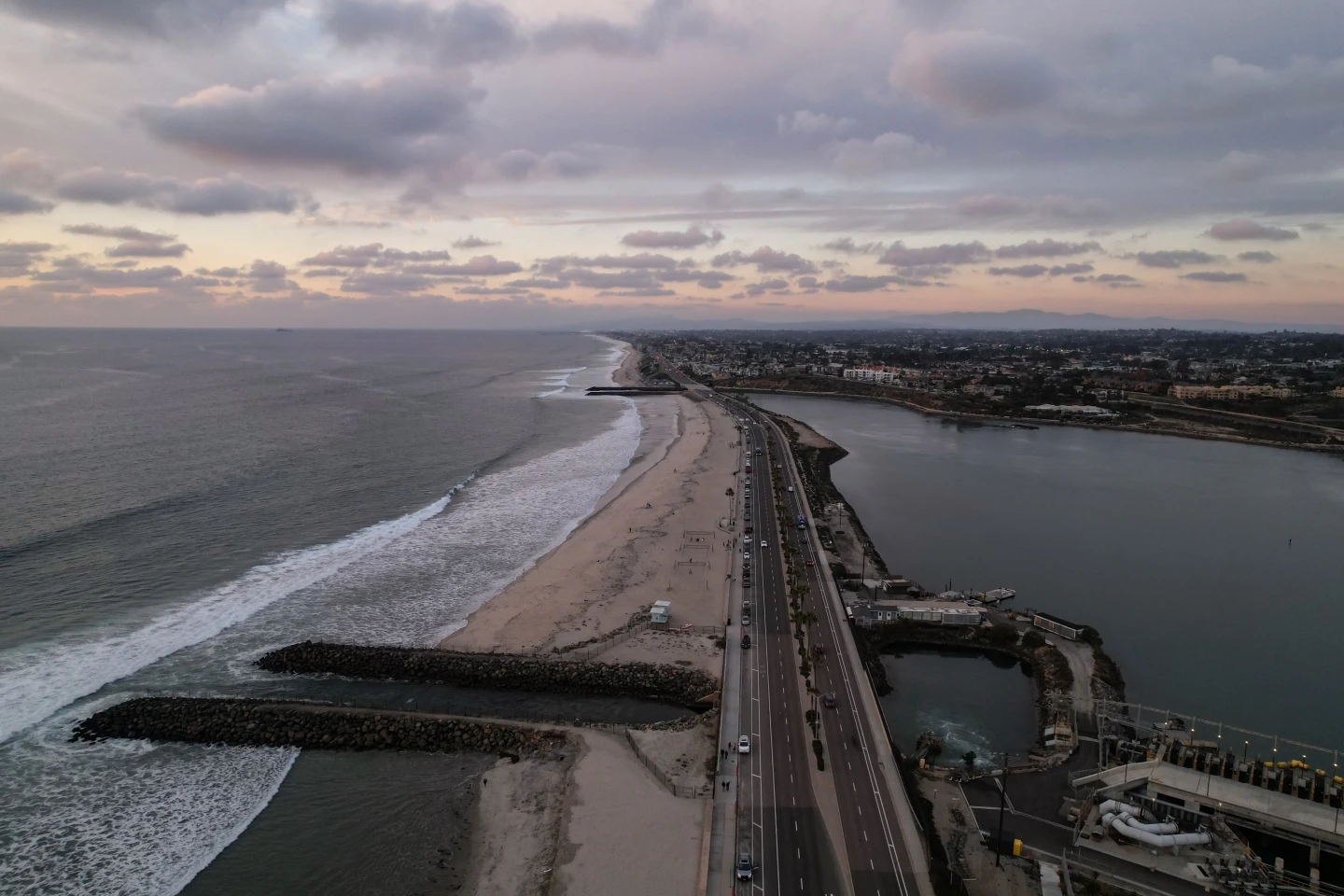
The plant dilutes its brine discharge with additional seawater before releasing it back into the ocean, and years of monitoring have shown no measurable impacts to surrounding marine life, she said.
Peters said the Carlsbad plant has significantly cut its energy consumption through efficiency improvements and operates under a plan aimed at making the facility carbon net-neutral. Many experts say water recycling and conservation should come first, noting wastewater purification typically uses far less energy than seawater desalination and can substantially reduce impacts on marine life. Las Virgenes is pursuing a wastewater reuse project alongside its desalination partnership.
“What we are looking for is a water supply that we can count on when Mother Nature does not deliver,” Las Virgenes’ Pedersen said. “Developing new sources of local water is really a critical measure to be more drought and climate ready.”





Heading

.webp)
.webp)
.webp)
.webp)
.webp)

