




Deep Sea Solutions Can Alleviate Nevada & Arizona’s Water Shortage
Deep Sea Solutions Can Alleviate Nevada & Arizona’s Water Shortage


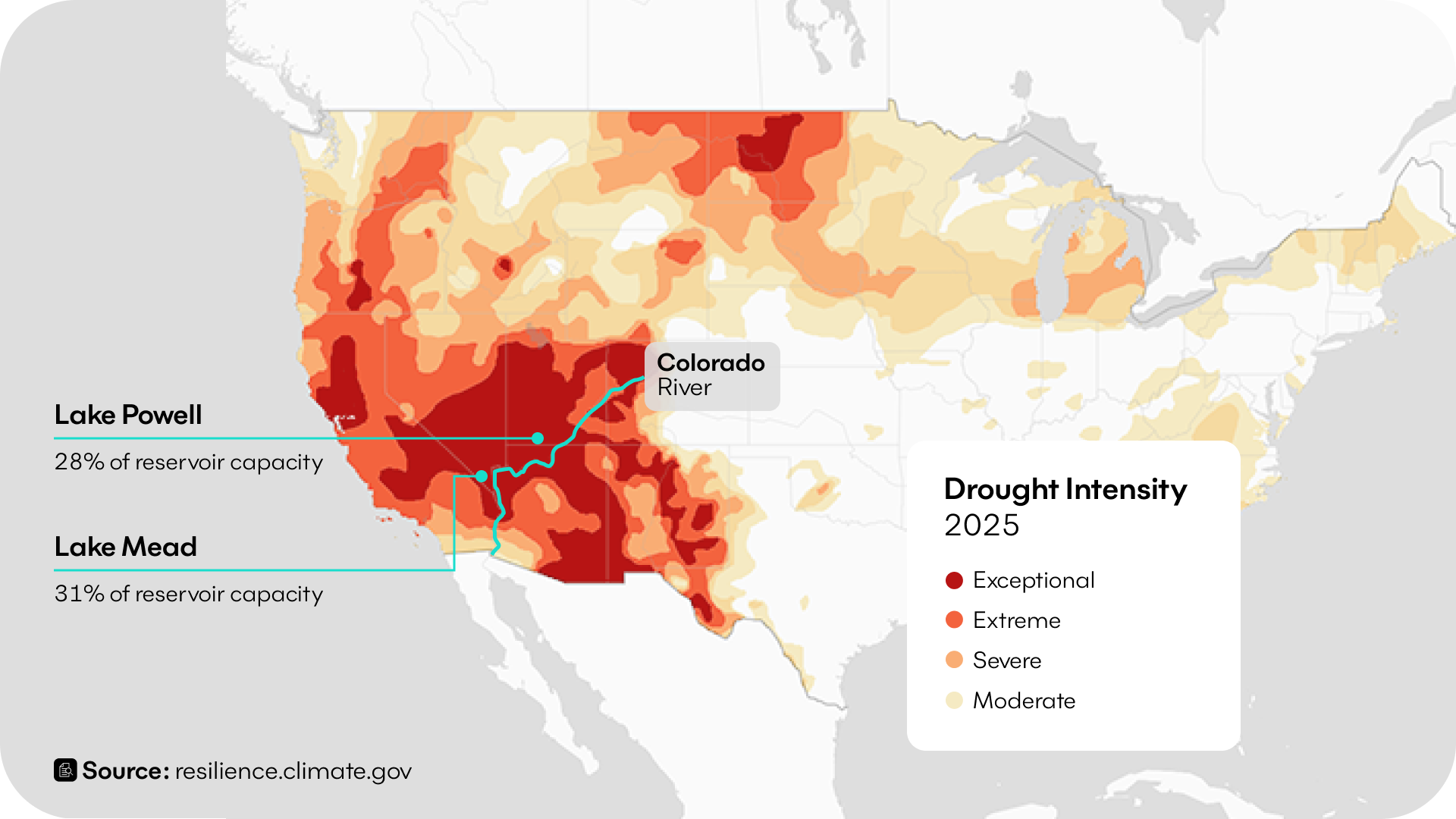
The Colorado River water shortage has emerged as one of the most critical challenges facing the American Southwest. Years of historic drought conditions, compounded by rising temperatures and long-term over-allocation of limited river flows, have dramatically reduced reservoir levels in iconic storage systems like Lake Mead and Lake Powell, prompting federal shortage declarations and mandatory cuts to water deliveries. Today, the Lower Basin States in the Colorado River Basin (Arizona, Nevada, and California), all share the Colorado River with four Upper Basin States (Colorado, Wyoming, Utah, and New Mexico). Each state has an apportionment of water based on the Colorado River Compact, negotiated more than a century ago in 1922. Unfortunately, supply is declining for all the states in the Colorado River Basin due to an historic drought fueled by climate change. California is the downstream U.S. state on the river system, meaning it depends on water that has already passed through other states.
For Nevada and Arizona’s water supply, the impacts of shrinking Colorado River flows are already tangible. The state depends heavily on the Colorado River and accounts for a significant portion of the states’ total water use. Under current shortage conditions, these states face reductions in their annual supply that affect cities, agriculture, and industries alike, which translates to real concerns about future water reliability and sustainability amid growth and climate pressures. Efforts to develop new strategies and alternative supply sources are underway as policymakers, water managers, and stakeholders grapple with how to protect Arizona and Nevada from a deeper water shortage in the decades ahead.
Supplementing Nevada and Arizona’s Water Supply from the Ocean
Arizona and Nevada are a couple of hundred miles inland from the Pacific, which begs the question, wouldn’t you need a big, expensive pipeline to convey water produced from the Pacific inland? It would be a major undertaking, costing billions of dollars.
OceanWell offers a faster, and more cost-effective alternative. By deploying a deep sea desalination water farm off the California coast, OceanWell produces a new, drought-resilient source of freshwater. We’re working with stakeholders to provide water to Arizona and Nevada through a “water exchange” with Southern California.
How a Water Exchange Works
A Water Exchange is OceanWell’s preferred approach to supplying water to inland populations. It works when multiple regions receive their water from a common source. If Southern California gains access to a new, reliable freshwater supply from offshore desalination, it can reduce its reliance on Colorado River allocations. That shift would allow more water to remain in Lake Mead and Lake Havasu for delivery to Arizona and Nevada, helping stabilize the region’s strained water supplies without constructing new interstate pipelines.
In practice, OceanWell would deliver desalinated water directly to the Metropolitan Water District of Southern California, which holds a significant Colorado River entitlement under the 1922 Compact. Because of this reliable source of new supply from the Pacific Ocean, Metropolitan could then leave water in Lake Mead and Lake Havasu for delivery to Nevada and Arizona, respectively.
California gains a purer, more reliable water source while Arizona and Nevada benefit from more water from the river. This is not a new concept. California, Arizona, and Nevada are already exploring ways to exchange water developed in California through the large-scale “Pure Water” recycling project in Southern California. OceanWell’s offshore desalination technology offers a scalable way to expand this approach and strengthen long-term water reliability across the Southwest.
Does it mean water will cost more?
This is not a “free ride” for the upstream states, though. The cost for the new Pacific source, the water production and the exchange process, would be funded by Arizona and Nevada.

What Makes Desalination a Sustainable Solution to the Nevada and Arizona Water Shortage?
- Reliable Supply: With its emerging plans for harvesting water from the Pacific Ocean in California, OceanWell can supply large amounts of “augmentation” water to prevent shortages of Colorado River water in Arizona and Nevada.
- Environmental Stewardship: OceanWell’s fresh water farms have been expressly designed to dramatically reduce or eliminate sea life mortality and the ecological damage of discharging concentrated brine into the ocean ecosystem. As a result, OceanWell can operate sustainably, preserving marine ecosystems while still producing large volumes of fresh water.
- Energy Savings: The OceanWell technology reduces energy use by up to 40% compared to other desalination technologies, reducing the costs of supply.
- Scalable Solution: Our modular pods can be deployed incrementally, growing with the needs of each state and avoiding substantial upfront capital costs until needed to meet later demands.
- Resilience Against Drought: Rather than depending solely on rainfall and snowpack, water exchanges ensure a drought-proof and climate-resilient supply of water that can stabilize the entire region’s long-term water future.
A Path Forward
The Southwest’s water future depends not on conflict, but on cooperative action between the states and new technologies that make affordable augmentation water available should be part of the solution. By tapping into the vast, renewable resources of the ocean and serving Arizona and Nevada as well as California, we can help secure clean water for millions of people for generations to come.
OceanWell is committed to working with state leaders, water agencies, and communities to build a future where no state has to choose between its prosperity and sustainability. Arizona and Nevada can plan a better, more hopeful water future, one where their destinies are not determined by rainfall and temperature changes.



Heading


